

The Notification That Nobody Clicks
An individual looks at his phone and gets an alert that he has approximately $ 400 in an official state database in his name. The information is correct, verified, and motivated by the high quality of data. They scroll past it. Several days later, there is another notification,n, and it is again disregarded. Take this behavior, then, and multiply it by millions of individuals. The outcome is daunting: tens of billions of dollars go unnoticed, even with more and more specific algorithms that are created to get them out.
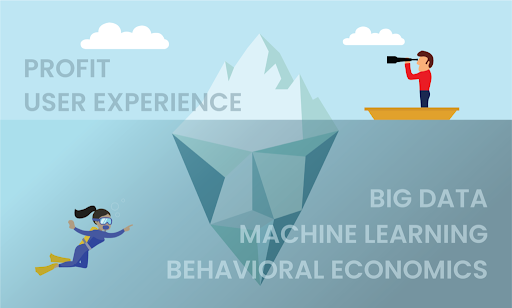
It is the data paradox of the contemporary data-based systems. The rate of user actions does not tend to increase and sometimes even decreases as the machine learning models get better. Accuracy does not represent action. Whether the data is correct or not is not the key question, but the main reason is why proper data is not able to motivate humans. The gap can be explained by the use of behavioral economics, which looks at the effect of cognitive bias, emotions, and attention limitations that overwhelm rational financial incentives.
The Cognitive Biases That Override Algorithmic Certainty
There are a few cognitive biases that always weaken the reaction towards the algorithmic notifications. Biases at present are the center of attention. Even when the future compensation is guaranteed, the work to compile paperwork, identify, and fill out forms is heavier than the compensation that awaits.
This effect is enhanced by status quo bias. Money in an inactive state through a government system is perceived to be neutral and secure, whereas action generates the perception of risk. Procrastination is supported by optimism bias. People think that they will do it later, never devoting themselves to a time schedule, and it often turns out that they will never do it.
Hyperbolic discounting also makes the motivation even less. A few hundred dollars a couple of weeks down the road are psychologically worth a lot less than the ease of evading the task today. Ironically, the more accurate the algorithm is, the more likely it will be dismissed. Urgency goes away when the user is sure that the money will be there in the future. Financial services records constantly demonstrate that levels of notification open were more than 50 percent, but completion was less than 10 percent, indicating the problem between awareness and action.
Trust Deficits in the Age of Data Breaches
The contemporary online world has conditioned people to be suspicious of suspicious financial information. Phishing, identity theft, and data breaches over the years have led to the conditioning of people to distrust personal notifications. In case of a message that contains correct personal information, it may cause alarm instead of confidence.
The too good to be true heuristic causes most users to disregard legitimate claims reflexively. This reaction is particularly high in the case of the communications related to the government systems or the official state resources, where the respective institutional trust has been undermined. Paradoxically, the higher the personalization, the more sophisticated the data is, and this fact is taken by some users as a sign of fraud or surveillance.
Digital trust studies have demonstrated a higher importance of perceived risk compared to the objective probability in financial decisions. There are even low-threat moves that are avoided when there is low trust. Defensive avoidance cannot be defeated by accuracy only in this context.
The Paradox of Choice in Multi-Step Digital Processes
It is hardly a one-click thing to claim unclaimed funds. Visitors are exposed to document requirements, eligibility reasons, and identity verification. Every step presents a load to the mind. Decision fatigue occurs when a person wonders about whether or not they are using the proper paperwork, whether it is worthwhile, and whether or not they will err.
This complication brings about analysis paralysis. The process of learning how to do it seems to be prohibitively expensive despite having a very obvious financial pay-off. Behavioral studies indicate that every step poses a significant risk of abandonment.
Services such as Claim Notify would resolve such psychological barriers by streamlining documentation processes and alleviating the cognitive burden during the recovery process. Such systems lower the friction that traditional systems cause accidentally by removing the number of steps and bringing a better understanding of progress.
Notification Fatigue and the Attention Economy
The average American receives dozens of notifications every day across email, messaging apps, work tools, and social media. Human attention is finite. As alerts accumulate, the brain adopts aggressive filtering strategies, dismissing anything that does not demand immediate emotional engagement.
Financial notifications compete poorly against platforms engineered to trigger dopamine responses. Over time, habituation dulls responsiveness, and alerts blur into background noise regardless of importance. Research on attention scarcity shows that repeated exposure without immediate reward leads to automatic dismissal, placing even high-value messages at a disadvantage.
The Emotional Barriers Data Scientists Miss
Behavioral science provides a way of solving problems that enhances action levels without altering the data. The most effective one is loss framing, the matter of showing money as money held in hand as opposed to money to get more urgency. Instructions to be carried out are essential as well. Special prompts are better than general awareness messages.
Social proof also lowers uncertainty since it indicates the number of other users who have successfully gone through the process. Follow-through is enhanced with commitment gadgets like soft deadlines. Anxiety is decreased by process transparency or visualization of steps. The combination of the approaches in experiments results in the quantifiable gains in completion rates, proving the fact that the behavior does change when the systems are aligned with the psychology.
Behavioral Interventions That Bridge the Psychology Technology Gap
Behavioral science provides a way of solving problems that enhances action levels without altering the data. The most effective one is loss framing. The matter of showing money as money held in hand, as opposed to money to get more urgency. Instructions to be carried out are essential as well. Special prompts are better than general awareness messages.
Social proof also lowers uncertainty since it indicates the number of other users who have successfully gone through the process. Follow-through is enhanced with commitment gadgets like soft deadlines. Anxiety is decreased by process transparency or visualization of steps. The combination of the approaches in experiments results in the quantifiable gains in completion rates, proving the fact that the behavior does change when the systems are aligned with the psychology.
Designing for Humans, Not Just Algorithms
The fact that the accurate notifications do not lead to action is not a technological malfunction. It is a human one. Algorithms are capable of determining value, but they cannot force people to act unless they are psychologically aligned with it. Systems constructed to be accurate do not take into consideration the biases, emotions, and attention constraints that define actual decisions.
The future of data-driven finance is in interdisciplinary design. The collaboration of behavioral economics and data science makes the dormant value available. The next kind of innovativeness will not be delivered through a more intelligent algorithm, but more innovative systems around the people who utilize them.
