

Introduction
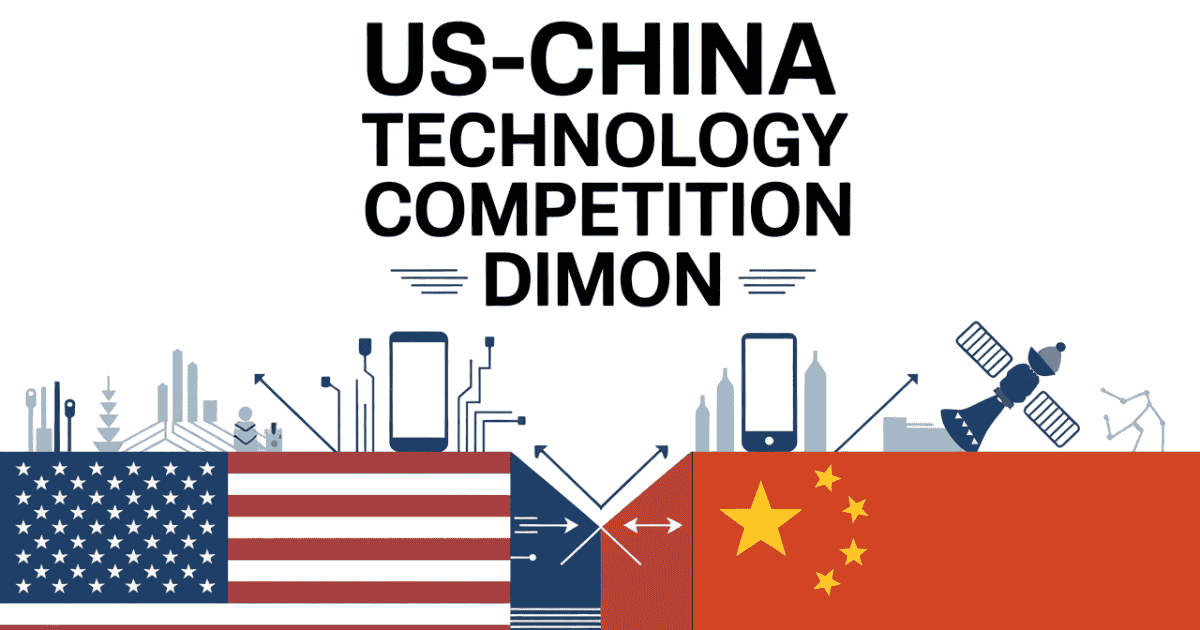
The US-China Technology Competition debate has become one of the most important topics shaping the global economy today. Technology is no longer just about innovation. It now defines power, security, and long-term economic strength. Jamie Dimon has openly warned that this rivalry could create serious risks for markets, businesses, and everyday consumers. His views stand out because they come from real financial experience, not political talk.
A careful US-China technology competition analysis shows how artificial intelligence, chips, and digital systems are turning into strategic weapons. The growing tension highlights the Jamie Dimon warning on US-China tech rivalry, the impact of US-China tech competition on the global economy, rising cybersecurity risks in US-China tech competition, and the bigger geopolitical risks of a US-China technology war that may reshape the future.
H2: What Is the US-China Technology Competition? Dimon Explained Simply
The US-China technology competition is a struggle over who leads future innovation. Both countries want control over AI, chips, networks, and data. In simple terms, the winner sets rules for trade, security, and economic growth worldwide.
From a US-China technology competition Dimon analysis, Jamie Dimon explains this rivalry as more than tech progress. It is about influence. Whoever dominates technology can shape global markets and political alliances for decades.
H2: Why Jamie Dimon’s Warning About Tech Rivalry Matters Now
Jamie Dimon believes the rivalry has reached a dangerous stage. His concern is not hype. It reflects real

stress in markets, supply chains, and investor confidence. The Jamie Dimon warning on us US-China tech rivalry highlights risks many leaders ignore.
Timing matters. Rising interest rates, fragile growth, and political tension make this tech conflict more risky. Dimon warns that small shocks can spread fast and hurt ordinary Americans through jobs, prices, and investments.
H3: Who Jamie Dimon Is and Why Markets Listen to Him
Jamie Dimon leads JPMorgan Chase, one of America’s largest banks. Markets listen because he sees data before trends appear publicly. When Dimon speaks, investors adjust strategies quickly, knowing his insights often predict future economic shifts.
H3: The Economic Risks Dimon Sees Ahead
Dimon sees slower growth, higher costs, and rising uncertainty. He believes technology restrictions may weaken cooperation. Over time, this can reduce productivity and innovation, increasing the chance of recessions tied to geopolitical conflict.
H2: How the US-China Technology Competition Impacts the Global Economy
The impact of us US-China tech competition on the global economy appears in trade slowdowns, market swings, and rising costs. When two economic giants clash, smaller economies feel pressure through exports, currencies, and investment flows.
Global firms now face uncertainty. They must rethink expansion plans and partnerships. This tension creates hesitation, which slows innovation and growth across industries from finance to manufacturing.
H2: Key Technology Areas Driving the US-China Rivalry
Technology competition focuses on control, not just invention. Both nations target sectors that shape future industries. These areas decide who leads economically and militarily in the coming decades.
H3: Artificial Intelligence and Smart Automation
The us china artificial intelligence competition drives rapid investment. AI improves productivity, defense systems, and healthcare. Control over AI also means control over data, which shapes economic power and surveillance capabilities.
H3: Chips, Semiconductors, and Hardware Power
Chips power everything. The semiconductor restrictions’ impact on China has slowed access to advanced hardware. These limits also affect U.S. firms relying on Chinese manufacturing, creating tension across the supply chain.
H3: Cyber and Digital Infrastructure
Cyber systems support banking, energy, and communication. Cybersecurity risks in us US-China tech competition grow as networks split. Digital trust weakens, increasing threats to data, infrastructure, and economic stability.
H2: How This Tech Competition Affects Businesses and Investors
The US-China technology rivalry risks for businesses include higher costs, lost markets, and regulatory confusion. Companies must navigate two systems with different rules, technologies, and political expectations.
Investors face volatility. The global markets’ reaction to us US-China tech war shows sudden stock swings and currency shifts. Long-term planning becomes harder when policies change quickly.
H2: Supply Chains Under Pressure in the US-China Tech Battle
The supply chain disruption from us US-China tech conflict affects electronics, autos, and healthcare equipment. Firms now diversify suppliers to reduce risk, but this raises costs and slows production.
Below is a simple overview of current pressure points.
Industry Area | Main Risk | Business Impact
Semiconductors | Export limits | Production delays
Electronics | Supplier shifts | Higher prices
Healthcare | Component shortages | Slower delivery
H2: Government Policies Shaping the US-China Technology Competition
| Industry Area | Main Risk | Business Impact |
|---|---|---|
| Semiconductors | Semiconductor restrictions impact on China | Production delays, higher costs |
| Electronics | Supply chain shifts | Slower delivery, increased prices |
| AI & Quantum Tech | Access limitations | Innovation delays, reduced competitiveness |
| Cyber & Networks | Cybersecurity risks in US China tech competition | Data breaches, operational disruptions |
Government action now defines the tech landscape. Policies aim to protect security but also reshape global trade and innovation patterns.
H3: US Restrictions, Bans, and Controls
The us export controls on Chinese technology target advanced chips and AI tools. These controls aim to protect national security but also reduce revenue for U.S. firms selling abroad.
H3: China’s Push for Tech Independence
China responds with a China technology self-sufficiency strategy. Heavy investment in domestic research reduces reliance on foreign suppliers. Over time, this may reshape global competition.
H2: Biggest Mistakes Companies Make During the Tech Cold War
Many firms underestimate political risk. Others rely too heavily on one market. These mistakes increase exposure during sudden policy changes.
Ignoring compliance rules or cybersecurity planning often leads to fines or data breaches. Companies that adapt early manage risk better and protect long-term growth.
H2: What the Future Looks Like According to Dimon’s Outlook
Dimon believes uncertainty will remain high. He urges businesses to plan for disruption rather than stability.
H3: Short-Term Market Shocks
Short-term shocks may include stock drops and supply delays. These events test investor confidence and stress fragile sectors during economic transitions.
H3: Long-Term Global Tech Shifts
Long-term change points to a divided global technology ecosystem, explained clearly by Dimon. Separate standards may reduce efficiency but increase regional control and security.
H2: Final Takeaway: How to Stay Safe and Smart in a Divided Tech World
The geopolitical risks of us US-China technology war affect everyone. Awareness matters. Businesses, investors, and consumers benefit from understanding these forces.
Staying informed helps you adapt. As the US-China Technology Competition Dimon (2025) evolves, smart decisions depend on knowledge, flexibility, and long-term thinking.
Faq’s
Q1: What is the US-China Technology Competition Dimon?
The US-China Technology Competition Dimon refers to the ongoing rivalry between the U.S. and China over leading technology like AI, semiconductors, and digital infrastructure. Jamie Dimon highlights its economic and geopolitical risks, showing how this competition could affect global markets and business strategies.
Q2: Why is Jamie Dimon warning about the US-China tech rivalry?
Jamie Dimon warns that the Jamie Dimon warning on us US-China tech rivalry reflects real dangers for investors, companies, and national economies. He points to disruptions in supply chains, regulatory conflicts, and rising cybersecurity risks in us US-China tech competition as key concerns.
Q3: How does the US-China tech competition impact global markets?
The impact of us US-China tech competition on the global economy is significant. It causes volatility in stocks, currencies, and trade, while influencing where companies invest and how industries plan for the future.
Q4: Which technologies are most important in this rivalry?
Critical areas include us U.S.-China artificial intelligence competition, semiconductors, hardware, and digital networks. Advances in AI, chips, and quantum computing are central to who will lead economically and militarily.
